
-1.png?width=50&name=Headshot%20(1)-1.png)
.png?width=50&name=Untitled%20design%20(4).png)
Our FODZYME clinician team attended FOOD: The Main Course 2026, a conference that focuses on...
There are a lot of digestive enzyme brands and formulations available and choosing the right one for each patient takes clinical nuance.
Many patients inquire about digestive enzymes or claim they’ve already tried them with mixed results. But patients are often less aware that digestive enzymes are not interchangeable. Many products claim to help with “digestion” broadly, but IBS symptoms are far more likely to be driven by fermentable carbohydrates (FODMAPs) than by incomplete breakdown of other food compounds.
Apart from lactase, the body does not produce enzymes for FODMAPs so targeted enzyme supplementation can be effective. When recommending an effective formula for each patient, knowing the difference between products and being able to critically evaluate their claims is hugely important.
The clinical value of any digestive enzyme depends on three main variables:
- What the enzyme targets (and whether that target is actually driving symptoms)
- Whether it’s present at a meaningful dose
- How it’s taken (because enzymes must come into contact with food to work)
Below is a practical framework for evaluating common over-the-counter enzymes often recommended for irritable bowel syndrome (IBS) — and what makes FODZYME different.
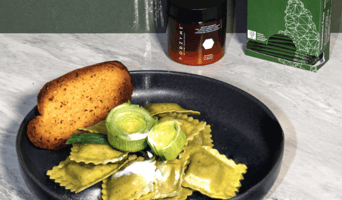
Broad Spectrum Enzyme Blends
Common broad spectrum blends often include amylases (for starch), lipases (for fats), and proteases (for protein). They generally make claims around helping manage digestive symptoms related to intolerances to proteins, starches, fats, dairy sugar, and other plant fibers.
These formulas can include a long list of enzymes. Alpha-galactosidase, cellulase, hemicellulase, pectinase, maltase, glucoamylase, xylanase, invertase, phytase, protease, bromelain, inulinase, and DPP-IV are just some examples.
There are two main problems with these types of products:
- First, they often target food compounds that are rarely responsible for symptoms. Patients with IBS typically don't have issues digesting proteins, fats, or most starches — their symptoms are triggered by specific poorly absorbed carbohydrates, like FODMAPs. So even if the enzymes are breaking down their target, they're not addressing the real problem that's leading to symptoms.
- Second, when they do include evidence-based enzymes that target genuine triggers, the dose may not be meaningful. When products include half a dozen (if not more) enzymes in their formula, the amount of each enzyme in the blend can be too small to provide symptom relief.
FODMAP-Specific Enzyme Blends
Another category of enzyme blends is specifically formulated to target FODMAPs, such as FODZYME. FODZYME breaks down the three most common FODMAP triggers in IBS:
- Fructans, in foods like garlic, onion, and wheat
- Lactose, in dairy
- Galacto-oligosaccharides (galactans/GOS), in beans, legumes, cruciferous vegetables, and some nuts
FODZYME features a novel and proprietary fructan hydrolase, backed by peer-reviewed research showing efficacy in breaking down 3g of fructans (roughly the amount in 6 garlic cloves).
Clinical research shows 78% of patients experience an improvement in bloating after 4 weeks, as well as overall improvements in gastrointestinal symptoms and quality of life. Furthermore, these patients report reduced dietary restriction, suggesting FODZYME helps them expand the nutritional diversity and quality of foods in their diets. As of publication, these findings make FODZYME the only clinically studied enzyme blend.
Fructan Hydrolase vs. Inulinase
Fructans are not a single compound. They exist in multiple structural forms, including inulin, graminan, and levan. Each type of fructan has differences in its linkages between the fructose and glucose units and their branching. For example, wheat mainly contains the fructan graminan.
The enzyme inulinase will primarily address inulin-type fructans, while fructan hydrolase has broader specificity to target the wider variety of fructans in common foods.
Additional FODMAP Enzymes: Lactase + Alpha-galactosidase
FODMAP blends also often include lactase and alpha-galactosidase to break down lactose and GOS, respectively. There is a strong body of research supporting the use of these two enzymes for management of bloating, abdominal pain, gas, and bowel irregularities in patients with digestive issues.
Some products suggest that alpha-galactosidase breaks down fructans, but there is little to no primary evidence supporting this as a clinically meaningful mechanism. Alpha-galactosidase has the strongest specificity for GOS.
Fructose Enzymes
Glucose isomerase (also called xylose isomerase) converts fructose into glucose or vice versa, depending on which sugar is in higher concentration. The rationale for its use in IBS is that fructose (when present in higher amounts than glucose) is poorly absorbed and triggers digestive symptoms.
However, studies on the clinical value of glucose isomerase are mixed. In practice, patients with fructose intolerance can often manage symptoms through dietary strategies, like monitoring portion sizes and pairing high fructose foods with glucose-rich foods. Additionally, as an isomerase that seeks equilibrium, this enzyme has the theoretical potential to convert glucose into fructose in situations where glucose already predominates.
Single Enzyme Products
Most patients with IBS have multiple FODMAP sensitivities and benefit from a multi-enzyme blend, but that’s not always the case. For those who are intolerant to just one or two FODMAP families, a single enzyme product can be the right choice.
This mainly applies to symptoms related to:
- Lactose, where lactase (eg. Lactaid) can help
- GOS, where alpha-galactosidase (eg. Beano) can help
Using a single enzyme with a meal is also appropriate when that meal contains a single dominant trigger (for example: lactose from ice cream, or GOS from a black bean soup). In reality, most meals contain multiple FODMAPs. However, this is a helpful tip to share with patients so that they learn to use enzymes strategically.
A practical note when counseling: watch out for products (especially chewables) that contain mannitol (a FODMAP) or other triggering stabilizers. These ingredients can contribute to symptoms themselves. Also encourage patients to seek formulas that are in a powder format or to open enzymes in capsules and sprinkle the contents on the meal, as this is important for efficacy (more on that later!).
Enzymes for Conditions beyond IBS
Specialized enzymes exist for other food intolerances that may overlap with IBS or may mimic IBS. For clinicians, these categories of enzymes are important to know about, as patients may inquire about them:
Histamine intolerance occurs when histamine is not adequately broken down in the body and is characterized by digestive and extra-intestinal symptoms. The digestive enzyme Diamine Oxidase (DAO) breaks down histamine in the digestive tract, preventing it from entering the body. While histamine intolerance is challenging to diagnose, research among patients with true intolerance shows that DAO enzymes can be a promising treatment.
Gluten-targeting enzymes generally contain one or several peptidases designed to break down the gluten protein. Specific enzymes in these blends may be prolyl endopeptidase, DPP-IV, latiglutenase, or other proprietary enzymes.
Products for gluten claim to help those with non-celiac gluten or wheat sensitivity tolerate gluten. However, there’s very little evidence to support gluten intolerance as a distinct condition so the clinical utility of these enzymes is minimal. Patients who eliminate wheat on a gluten-free diet and report that their digestive symptoms improve are most likely fructan sensitive. In these cases, a fructan-targeting enzyme, like fructan hydrolase, can help patients confidently reintroduce wheat products, like bread, pasta and baked goods.
Remember that for those with celiac disease, a gluten free diet is the only treatment. Exciting research is looking into the use of enzymes for treatment of celiac disease, including TAK-062 which recently passed a phase 1 trial, but these studies are still ongoing.
Lastly, congenital sucrase-isomaltase deficiency (CSID) is a genetic condition that can present with IBS-like symptoms. Sucrase-isomaltase is an enzyme complex that breaks down two types of carbohydrates. The sucrase part breaks sucrose (table sugar) into glucose and fructose, while the isomaltase part helps complete starch digestion. Like lactase, sucrase-isomaltase is produced in the small intestine. It's also worth noting that fructan hydrolase can have notable sucrase activity.
Why Enzyme Administration Matters
Whether an enzyme will help a patient manage their symptoms also depends on how the enzyme is taken. Digestive enzymes work on food itself (not the body) so they must come into contact with their intended target to effectively break it down.
Enzyme activity units often dominate conversations around enzyme formulas, but there’s more to consider. "Activity units" measures an enzyme’s ability to catalyze a particular biochemical reaction under standard conditions. However, other factors like temperature, pH, time, the presence of other substances and mode of administration all influence enzyme activity.
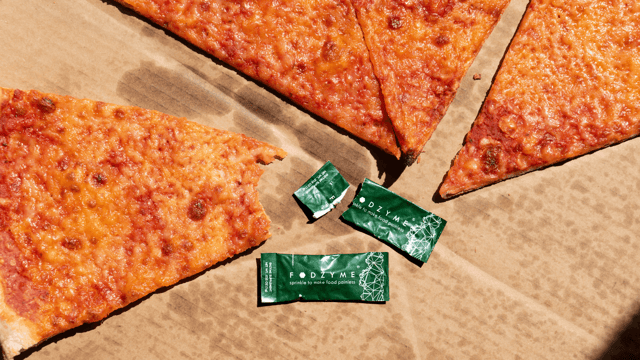
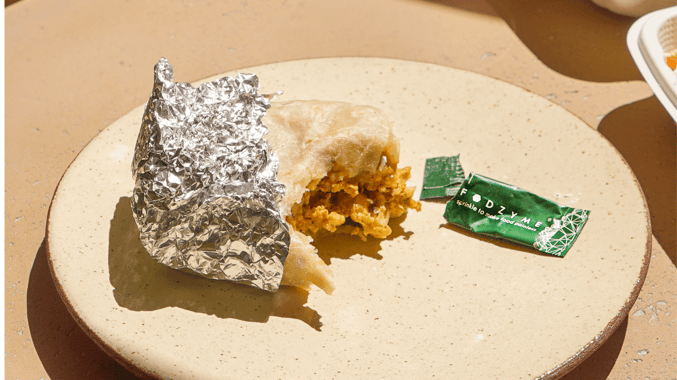
Core to FODZYME's innovation and efficacy is its powder format. As a powder, FODZYME is specifically designed to maximize homogenization between the enzymes and food. This ensures maximum contact between the enzymes and their FODMAP targets, which leads to optimal FODMAP breakdown.
With enzymes like FODZYME’s, a pill or capsule does not allow the enzyme to sufficiently and quickly work into the food. Instead, enzymes in pills or capsules may remain localized until they reach the small intestine, whose environment is less favorable for FODMAP breakdown due to its higher pH environment (yes, FODMAP-targeting enzymes prefer the slightly acidic environment of the stomach!). Plus, delaying food-enzyme contact increases the risk that enzymes become digested before making contact with FODMAPs.
Many patients who have previously tried other digestive enzymes with moderate success find that FODZYME is better able to help them due to it’s powder administration.
The Bottom Line
Digestive enzymes can be a valuable tool for improving dietary flexibility and quality of life in the appropriate patients. Find a deeper look at the clinical evidence supporting enzyme use and how to integrate them into nutritional counseling in our research brief.

.png?width=50&name=Headshot%20(4).png)