
Research Brief
Use and Benefits of Digestive Enzymes for FODMAP Intolerances
Introduction
For 50-80% of those with Irritable Bowel Syndrome (IBS), a low fermentable oligo-, di-, monosaccharides, and polyols (FODMAPs) diet helps manage abdominal pain, bloating, and other digestive symptoms [1]. However, the low FODMAP diet can be complex, and access to dietary resources and dietitians trained in the low FODMAP diet approach can be limited.
Excessive dietary restriction during the low FODMAP diet is common and long-term adherence poses risks for nutritional deficiencies, disordered eating, gut microbiome changes, and social and psychological consequences [2]. Thus, the low FODMAP diet may not be appropriate for all cases, even if FODMAP intolerance is suspected.
What are digestive enzymes?
The use of targeted digestive enzymes designed to break down FODMAPs can be one strategy used to avoid excessive dietary restriction.
Broadly, enzymes are highly specialized proteins (chains of amino acids) folded in particular ways. FODMAP-targeting digestive enzymes are a specific category of enzyme designed to act on FODMAPs in foods to break them down before they can trigger symptoms.
Use of digestive enzymes can be an effective method for those with FODMAP intolerances to ensure nutritional adequacy, dietary flexibility, symptom relief, and improved quality of life.
Research Overview
There is a mature body of research supporting the efficacy of dietary enzyme supplementation for FODMAP intolerance.
Efficacy of Digestive Enzymes
Research shows that patients with carbohydrate maldigestion and malabsorption, including FODMAP sensitivities, can experience symptomatic benefit from the use of digestive enzymes as they consume these foods.
Lactase: For several decades, lactase supplementation has been used to support digestion of lactose-containing foods.* Lactose is a disaccharide carbohydrate and falls under the “D” category of the FODMAP family. Research suggests that those with lactose intolerance can benefit from use of supplementary lactase enzymes with lactose-rich foods to manage symptoms associated with lactose maldigestion [3]. Studies conducted among both adults and children show the efficacy of exogenous lactase, also called β-D-galactosidase, in reduction of bloating, abdominal pain and gas [4-9].
Alpha-galactosidase: The majority of findings suggest that use of alpha-galactosidase (aka α-galactosidase) supports management of symptoms of irritable bowel syndrome (IBS) related to dietary galacto-oligosaccharides, or galactans (GOS) (part of the oligosaccharide, “O” family of FODMAPs). Specifically, in those with IBS alpha-galactosidase helps prevent increases in gas and bloating associated with GOS consumption, such as beans and legumes [10-12].* Supplementation with α-galactosidase has also been found to significantly reduce global distress, a measure of mental health [12].
FODZYME®’s Innovative Fructan Hydrolase
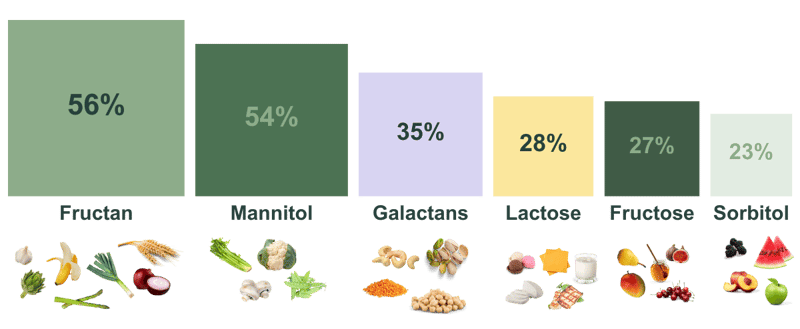
FODZYME® is a enzyme blend featuring fructan hydrolase, lactase and alpha-galactosidase. FODZYME®’s proprietary fructan hydrolase breaks down fructans, the most common gut symptom trigger [13, 14].* Like GOS, fructans are also part of the oligosaccharide (“O”) family of FODMAPs.
The Most Common FODMAP Triggers [14]
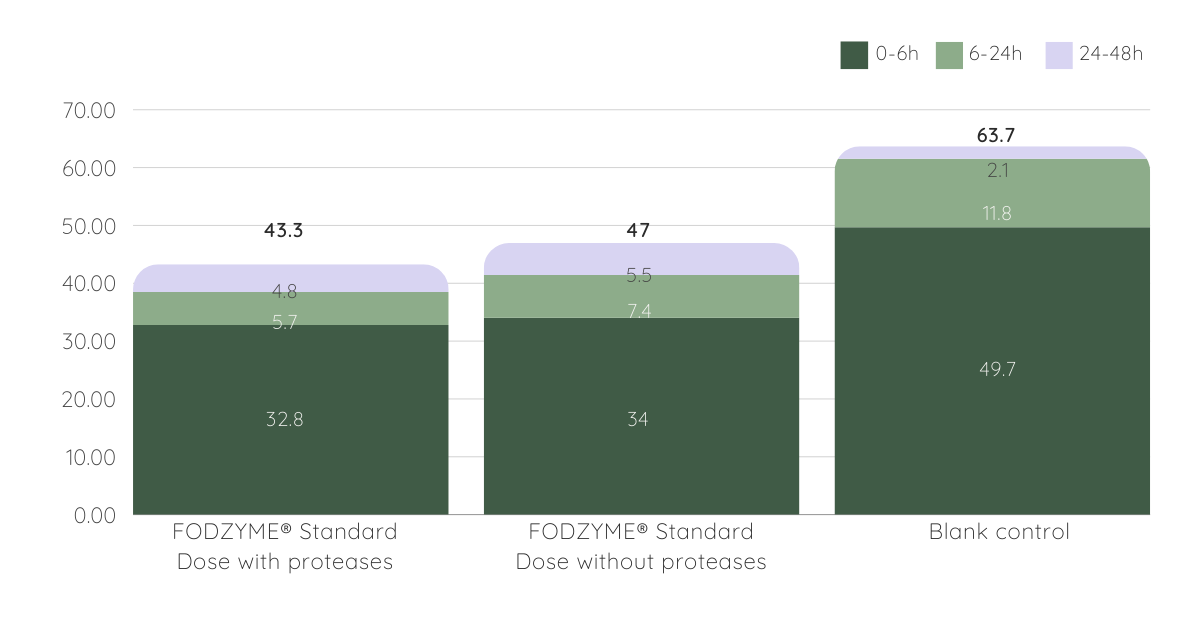
Peer-reviewed research demonstrates FODZYME®'s fructan hydrolase breaks down 90% of a 3g dose of fructan (roughly 6 garlic cloves worth of fructan) under simulated gastric conditions (SHIME model).* This research also illustrates that FODMAP-targeting enzymes, such as FODZYME®'s, are resilient to stomach pH conditions, confirming enzymatic activity remains significant despite exposure to acidity and proteases in the stomach [15].
FODZYME®'s Enzymatic Digestion in Simulated Gastric Conditions [15]
% test fructan (3g of Inulin, Jarrow® Inulin FOS) liberated as fructose at different time points in the stomach simulator
.png "FODZYME Efficacy")
Further intestinal modeling demonstrates a significant portion of the released fructose is absorbed during simulated small intestinal transit (70%), with a corresponding decrease in microbial gas production.
FODZYME® Decreases Gas Production in Model GI Tract[15]
▲ gas production (kPa) at different time periods
A Powder Format Increases Efficacy
Digestive enzymes like FODZYME® begin work as soon as they come into contact with FODMAPs and are most effective when they can freely homogenize with food. FODZYME®’s powder format maximizes homogenization between its digestive enzymes and food, facilitating greater contact between the enzymes and their target FODMAPs at the post-prandial gastric pH most favorable to FODMAP break down [16].*
Digestive enzymes in capsules or pills are a less efficacious method for delivering carbohydrate-targeting enzymes, as they isolate enzymes from their intended target and may be deactivated in the stomach before coming in contact with FODMAPs (note: this is not the case for prescription enzymes, which are used in cases where endogenous enzyme production is insufficient. These enzymes are generally encapsulated to delay release until arrival in the small intestine).
With its specialized blend and highly-targeted mode of administration, FODZYME® represents the next frontier in digestive enzyme science to support patients with FODMAP intolerances.

Nutritional Considerations
The low FODMAP diet can be highly complex and is best implemented with the support of a trained professional, such as a registered dietitian.
Nutrition Concerns with a Low FODMAP Diet
Restrictive diets, such as low FODMAP, must be implemented with extreme sensitivity in many groups, such as children, the elderly, those who are pregnant and other populations with additional energy and nutrient needs or challenges meeting them. Negative consequences of the low FODMAP diet are diverse and may include social isolation, increased food stress and anxiety, development of maladaptive or restrictive eating habits, nutrient deficiencies and alterations to gut microbiota [17-20].
A low FODMAP diet is associated with increased risk for nutrient and energy deficiencies, with particular concern for iron, calcium and protein [17]. Furthermore, FODMAPs are present in many fiber-rich foods. A typical Western diet already tends to be low in fiber and a low FODMAP diet may further reduce fiber intake.
Digestive enzymes support development of a tailored, nutritionally robust diet that is sustainable long-term.
Nutritional Benefits of Enzymes
Use of digestive enzymes with FODMAP containing foods can provide benefits beyond symptomatic relief by enabling a more nutrient-dense, diverse diet.
For example, enzyme supplementation can allow for increased intake of tofu, peas, legumes, nuts, soy, dairy and many other nutrient-rich plant and dairy foods, which can help avoid nutritional deficiencies and their consequences.
With lactase specifically, lactose-containing foods can be enjoyed more freely, providing particular benefits to support bone health. And among vegetarians and vegans, digestive enzymes can be particularly beneficial to enable inclusion of more diverse, plant-based protein options, such as legumes and pulses [17].
When there are fewer symptoms from FODMAP-containing foods due to targeted digestive enzyme supplementation, whole-food, plant-based fiber sources can be enjoyed more liberally.

A high-fiber diet reduces risk for many gastrointestinal diseases and intake of prebiotic fibers, such as fructans and galacto-oligosaccharides, are known to be provide particular benefits to support short-chain fatty acid production (SCFA) and digestive health [18].
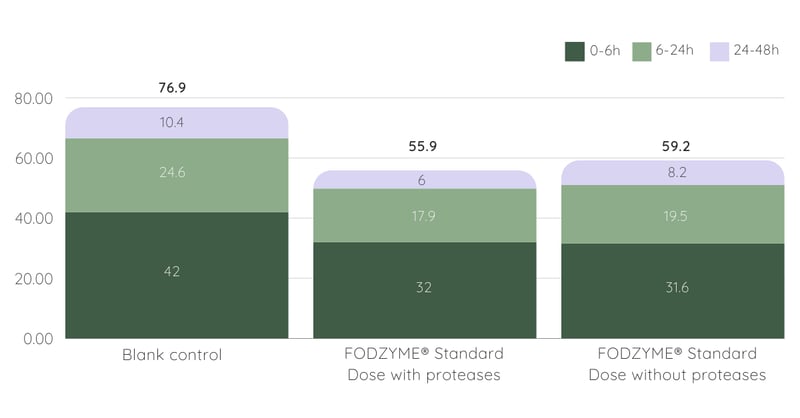
In-vitro research in a simulated gut model on FODZYME® administration with prebiotic fiber demonstrates that SCFA production is reduced but not depleted, suggesting that use of digestive enzymes with FODMAPs may be more favorable to overall colonic health than avoiding FODMAPs altogether [15].*
Short Chain Fatty Acids (SCFA) Production is Lower but Preserved with FODZYME® [15]
▲ total SCFA (mM) at different time periods
Clinical Application of Enzymes
For those looking to expand their diet despite FODMAP sensitivities, digestive enzymes can be a highly effective and safe intervention [12].
Recommended Use of Digestive Enzymes
Guidelines published in the Journal of Neurogastroenterology and Motility on how to implement the low FODMAP diet into gastroenterological and nutrition practice recommend the use of digestive enzymes, like those in FODZYME®’s formula, for symptom management and to allow for more dietary flexibility [21]. Benefits also extend well beyond symptom control and into the social and psychological realm to allow more FODMAP flexibility [21].
Monash University, the leading research institution on FODMAPs and the low FODMAP diet, recommends use of digestive enzymes to enable a less restrictive diet long term while managing symptoms [22].
A prospective 4-week real-world pre–post cohort study (n=118) on FODZYME®, found most participants report clinically meaningful improvements (≥30%) in bloating/flatulence (78.0%) and abdominal pain (65.3%), with subtype-specific improvements in diarrhea (IBS-D: 75.0%) and constipation (IBS-C: 72.7%). Quality of life and food avoidance behaviors also improved.* This data supports use of FODMAP-targeting enzymes as a practical, effective therapy for symptom management, particularly for patients who respond to FODMAP reduction but struggle with long-term restriction [23].

Digestive enzymes may also be used prior to or in lieu of a traditional low FODMAP diet. Some people may be able to identify high FODMAP foods as triggers, such as garlic, onion, wheat and beans, without needing to implement an elimination diet like low FODMAP. In these instances, digestive enzymes can be used with known or highly suspected triggers to validate a FODMAP intolerance and learn how FODMAP-targeting digestive enzymes can provide relief without dietary restriction.
From the ability to enjoy a communal family meal to the confidence to enjoy a catered meal at a friend's wedding, digestive enzymes provide invaluable nutritional and psychological benefits to help those with IBS enjoy the many culinary and social aspects food plays in patients' lives [21].
Helping Patients Get Started with Digestive Enzymes
When introducing FODMAPs with the help of digestive enzymes, start gradually and introduce one FODMAP at a time to monitor symptoms. Encourage patients to try digestive enzymes with a variety of foods and meals to fully understand how their body responds and to learn the relief they can provide with various foods.
Patients can expect to see a benefit roughly 4-8 hours after a FODMAP-rich meal, which is when FODMAPs generally tend to reach the colon and trigger distress [24]. If symptoms improve following an otherwise triggering meal, this signals digestive enzymes can support greater FODMAP intake and a less restrictive diet.
Digestive enzyme use will depend on personal tolerances and the frequency and quantity of FODMAPs consumed. With the exception of lactase, the body does not produce enzymes for FODMAPs. Rather, FODMAP intolerances arise from alterations in the gut microbiota (dysbiosis), increased sensitivity to digestive processes (visceral hypersensitivity) and other miscommunications between the gut-brain-axis, though research remains ongoing [25, 26]. Digestive enzymes may be used as frequently and for as long as FODMAP intolerances persist.
Conclusion
Effective management of digestive sensitivities, seen in those managing conditions like IBS, often requires both dietary and non-dietary strategies to manage symptoms, ensure adequate nutritional intake and enjoy the many social and cultural pleasures of food.
Digestive enzymes allow for more dietary flexibility and greater inclusion of the many nutritious, delicious high FODMAP foods. For those with FODMAP intolerances, benefits of regular digestive enzyme use include greater nutritional intake, symptom management and reduced food fears and anxiety.
Access more information and tools for healthcare providers to support patients seeking to trial digestive enzymes, such as Handouts & Resources and How to Get Patients Started with FODZYME®.
References
- Gearry R, Skidmore P, O’Brien L, Wilkinson T, Nanayakkara W. Efficacy of the low FODMAP diet for treating irritable bowel syndrome: the evidence to date. Clinical and Experimental Gastroenterology. Published online June 2016:131. doi:10.2147/ceg.s86798
- Halmos EP, Gibson PR. Controversies and reality of the FODMAP diet for patients with irritable bowel syndrome. J Gastroenterol Hepatol. 2019;34(7):1134-1142. doi:10.1111/jgh.14650
- Hill P, Muir JG, Gibson PR. Controversies and Recent Developments of the Low-FODMAP Diet. Gastroenterol Hepatol (N Y). 2017;13(1):36-45.
- EFSA Panel on Dietetic Products, Nutrition and Allergies (NDA); Scientific Opinion on the substantiation of health claims related to lactase enzyme and breaking down lactose (ID 1697, 1818) pursuant to Article 13(1) of Regulation (EC) No 1924/2006 on request from the European Commission. EFSA Journal 2009; 7(9):1236. [13 pp.]. doi:10.2903/j.efsa.2009.1236.
- Ibba I, Gilli A, Boi MF, Usai P. Effects of Exogenous Lactase Administration on Hydrogen Breath Excretion and Intestinal Symptoms in Patients Presenting Lactose Malabsorption and Intolerance. BioMed Research International. 2014;2014:1-7.
- DiPalma JA, Collins MS. Enzyme replacement for lactose malabsorption using a beta-D-galactosidase. Journal of Clinical Gastroenterology. 1989;11(3):290–293.
- Lin MY, Dipalma JA, Martini MC, Gross CJ, Harlander SK, Savaiano DA. Comparative effects of exogenous lactase (?-galactosidase) preparations on in vivo lactose digestion. Digestive Diseases and Sciences. 1993;38(11):2022-2027. doi:https://doi.org/10.1007/bf01297079
- Biller JA, King S, Rosenthal A, Grand RJ. Efficacy of lactase-treated milk for lactose-intolerant pediatric patients. The Journal of Pediatrics. 1987;111(1):91–94.
- Medow MS, Thek KD, Newman LJ, Berezin S, Glassman MS, Schwarz SM. Beta-galactosidase tablets in the treatment of lactose intolerance in pediatrics. Am J Dis Child. 1990;144(11):1261-1264. doi:10.1001/archpedi.1990.02150350093034
- Tuck CJ, Taylor KM, Gibson PR, Barrett JS, Muir JG. Increasing Symptoms in Irritable Bowel Symptoms With Ingestion of Galacto-Oligosaccharides Are Mitigated by α-Galactosidase Treatment. American Journal of Gastroenterology. 2018;113(1):124-134. doi:https://doi.org/10.1038/ajg.2017.245
- Di Stefano M, Miceli E, Gotti S, Missanelli A, Mazzocchi S, Corazza GR. The Effect of Oral α-Galactosidase on Intestinal Gas Production and Gas-Related Symptoms. Digestive Diseases and Sciences. 2006;52(1):78-83. doi:https://doi.org/10.1007/s10620-006-9296-9
- Di Nardo G, Oliva S, Ferrari F, et al. Efficacy and tolerability of α-galactosidase in treating gas-related symptoms in children: a randomized, double-blind, placebo controlled trial. BMC Gastroenterology. 2013;13(1). doi:https://doi.org/10.1186/1471-230x-13-142
- Eswaran S, Jencks KJ, Singh P, Rifkin S, Han-Markey T, Chey WD. All FODMAPs aren't created equal: Results of a randomized reintroduction trial in patients with irritable bowel syndrome. Clin Gastroenterol Hepatol. Published online May 8, 2024. doi:10.1016/j.cgh.2024.03.047
- Van den Houte K, Colomier E, Routhiaux K, et al. Efficacy and Findings of a Blinded Randomized Reintroduction Phase for the Low FODMAP Diet in Irritable Bowel Syndrome. Gastroenterology. Published online February 23, 2024. doi:10.1053/j.gastro.2024.02.008
- Ochoa KC, Samant S, Liu A, Duysburgh C, Marzorati M, Singh P, Hachuel D, Chey W, Wallach T. In-Vitro Efficacy of Targeted FODMAP Enzymatic Digestion (FODZYME®) in a High-Fidelity Simulated Gastrointestinal Environment. Gastro Hep Advances. Published online 2022. https://doi.org/10.1016/j.gastha.2022.10.011. This study was funded by Kiwi Biosciences.
- Piper, D. W.; Fenton, B. H. pH stability and activity curves of pepsin with special reference to their clinical importance. Gut 1965, 6 (5), 506–508. DOI: 10.1136/ gut.6.5.506.
- Staudacher HM. Nutritional, microbiological and psychosocial implications of the low FODMAP diet. J Gastroenterol Hepatol. 2017;32 Suppl 1:16-19. doi:10.1111/jgh.13688
- Di Rosa C, Altomare A, Imperia E, Spiezia C, Khazrai YM, Guarino MPL. The Role of Dietary Fibers in the Management of IBD Symptoms. Nutrients. 2022;14(22):4775. Published 2022 Nov 11. doi:10.3390/nu14224775
- Fisher K, Hutcheon D, Ziegler J. Elimination of Fermentable Carbohydrates to Reduce Gastrointestinal Symptoms in Pediatric Patients With Irritable Bowel Syndrome: A Narrative Review. Nutr Clin Pract. 2020;35(2):231-245. doi:10.1002/ncp.10269
- Kaiser L, Allen LH; American Dietetic Association. Position of the American Dietetic Association: nutrition and lifestyle for a healthy pregnancy outcome. J Am Diet Assoc. 2008;108(3):553-561. doi:10.1016/j.jada.2008.01.030
- Sultan N, Varney JE, Halmos EP, et al. How to Implement the 3-Phase FODMAP Diet Into Gastroenterological Practice. J Neurogastroenterol Motil. 2022;28(3):343-356. doi:10.5056/jnm22035
- Varney J. Digestive enzymes and IBS. Monash FODMAP. Published April 28, 2021. Accessed [May 9, 2024]. https://www.monashfodmap.com/blog/digestive-enzymes-and-ibs/
- Kaye AJ, Meyers SR, Hachuel D, Wells J, Wallach T, Thor S. FODMAP-Targeting Digestive Enzyme Blend for Management of Gastrointestinal Symptoms: A “Real-World” Pre-Post Intervention Cohort Study. Gastro Hep Advances. 2026. doi:10.1016/j.gastha.2026.100898. This study was funded by Kiwi Biosciences.
- McNamara L. Eating and IBS symptoms. Monash FODMAP. Published September 3, 2018. Accessed [May 9, 2024]. https://www.monashfodmap.com/blog/eating-and-ibs-symptoms/
- Tuck CJ, Biesiekierski JR, Schmid-Grendelmeier P, Pohl D. Food Intolerances. Nutrients. 2019;11(7):1684. Published 2019 Jul 22. doi:10.3390/nu11071684
- Staudacher HM, Whelan K. The low FODMAP diet: recent advances in understanding its mechanisms and efficacy in IBS. Gut. 2017;66(8):1517-1527. doi:10.1136/gutjnl-2017-313750